Studying Game Programming in Spain: What You Learn and Career Paths
Studying game programming in Spain has become an increasingly attractive option for students looking for a technically demanding university education focused on programming and interactive systems. Far from purely creative or superficial approaches, video game development today is an advanced specialization within computer science and software engineering.
Within Europe, Spain offers a competitive academic and economic context for this type of education, combining specialized university programs, a growing international academic environment, and a competitive cost of living compared to other European countries. For students asking where to study game programming in Spain, evaluating what this degree truly involves is a critical first step.

What You Actually Study in a Game Programming Degree
A game programming degree is not about casually learning how to make games, but about acquiring a strong technical foundation in applied computer science. These programs are built around core disciplines such as advanced programming, data structures, mathematics, physics, artificial intelligence, and engine architecture.
Video games are used as a technical framework to solve complex real-time software problems: performance optimization, simulation, interactive systems, and development under strict technical constraints. For this reason, game programming shares part of its DNA with traditional computer science degrees, applied in a particularly demanding real-time context.
Game Programming as Applied Computer Science and Software Engineering
From an academic perspective, a serious game programming program is an applied software engineering program. The goal is not only to write code, but to understand how robust, scalable, and efficient systems are designed and maintained.
This approach equips graduates to apply their skills beyond the video game industry. Many professionals trained in game programming work in areas such as simulation, virtual reality, computational visualization, technical software development, and complex real-time systems. Choosing where to study game programming means recognizingthis technical depth and its long-term impact on employability.
Learning Through Real Projects and Team-Based Development
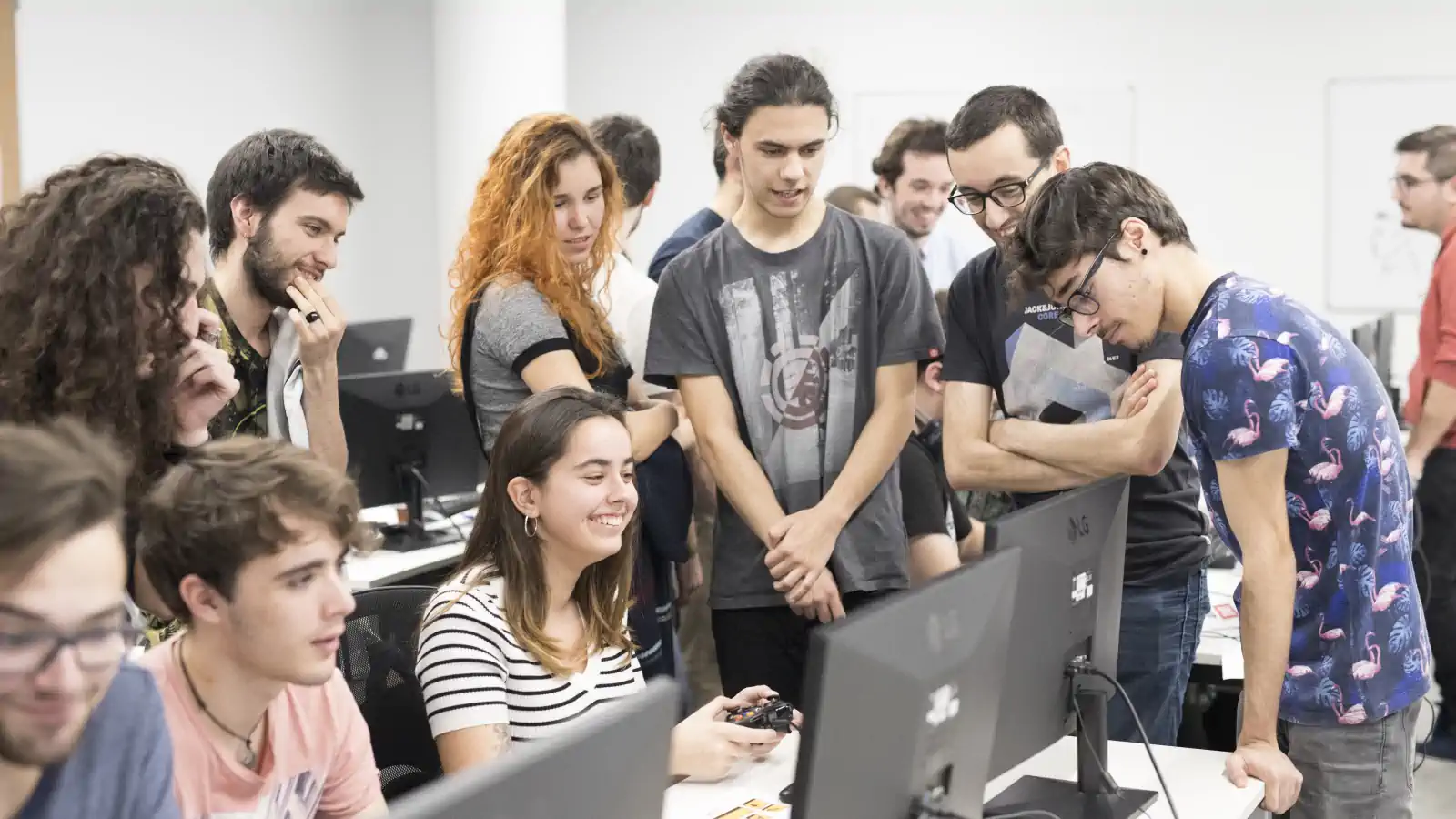
One defining characteristic of the most demanding programs is project-based learning. Throughout the degree, students work in multidisciplinary teams on year-long projects that replicate real professional development environments.
This model forces students to integrate technical knowledge, plan and iterate over time, document complex systems, and collaborate with both technical and creative profiles. Teamwork is not an add-on, but a core part of the learning process, as video game development is inherently collaborative.
Technical and Professional Skills Developed in a Game Programming Degree
During a university degree in game programming, students acquire both advanced technical skills and essential professional competencies. These include analytical thinking, complex problem-solving, technical communication, time management, and collaborative work.
Such skills are crucial in professional environments where projects are long, technically demanding, and require coordination across multiple disciplines. The combination of deep technical training and practical experience is one of the main advantages of this type of education compared to more generalist programs.
Who This Degree Is (and Is Not) For
Studying game programming is not for everyone, and understanding this is essential before choosing this path. It is designed for students who are motivated to understand how video games actually work under the hood, build complex systems from scratch, and tackle technical challenges where programming and logical reasoning play a central role.
This is a demanding degree, with a high technical workload and a sustained pace of work. This level of rigor is precisely what allows programs of this type to train highly prepared technical professionals.

Career Opportunities After a Game Programming Degree
Career opportunities in game programming extend far beyond entertainment. Graduates may work as gameplay programmers, engine developers, artificial intelligence specialists, simulation engineers, or interactive systems developers.
Moreover, the transferability of these skills to other technological sectors is significant. Many professionals trained in game programming work in industrial simulation, virtual reality, scientific visualization, interactive software, or technology-driven industries worldwide.
Where to Study Game Programming in Spain: The DigiPen Approach
Choosing a game programming university in Spain requires careful analysis of each program’s academic focus. DigiPen Institute of Technology Europe- Bilbao offers the Bachelor of Science in Computer Science in Real-Time Interactive Simulation, a highly practical degree with a strong foundation in programming, mathematics, and real-time interactive software development.
The curriculum is structured over four years around team-based projects that replicate professional production environments. This approach prepares students to work in demanding technical contexts, both within the video game industry and in other sectors where real-time, interactive, and simulation software plays a critical role.
This type of degree is especially relevant for students looking for a technically rigorous alternative to traditional computer science programs.