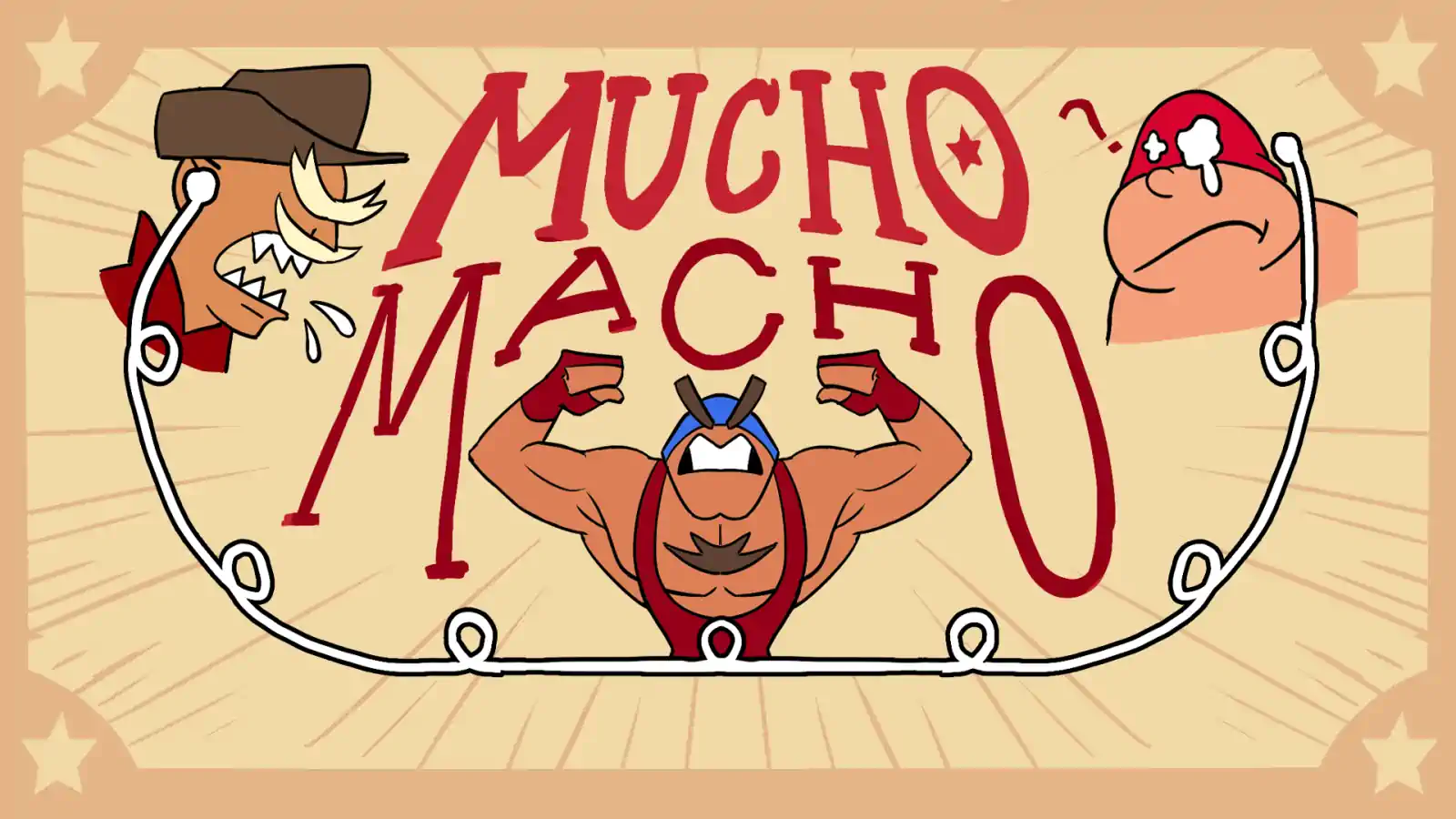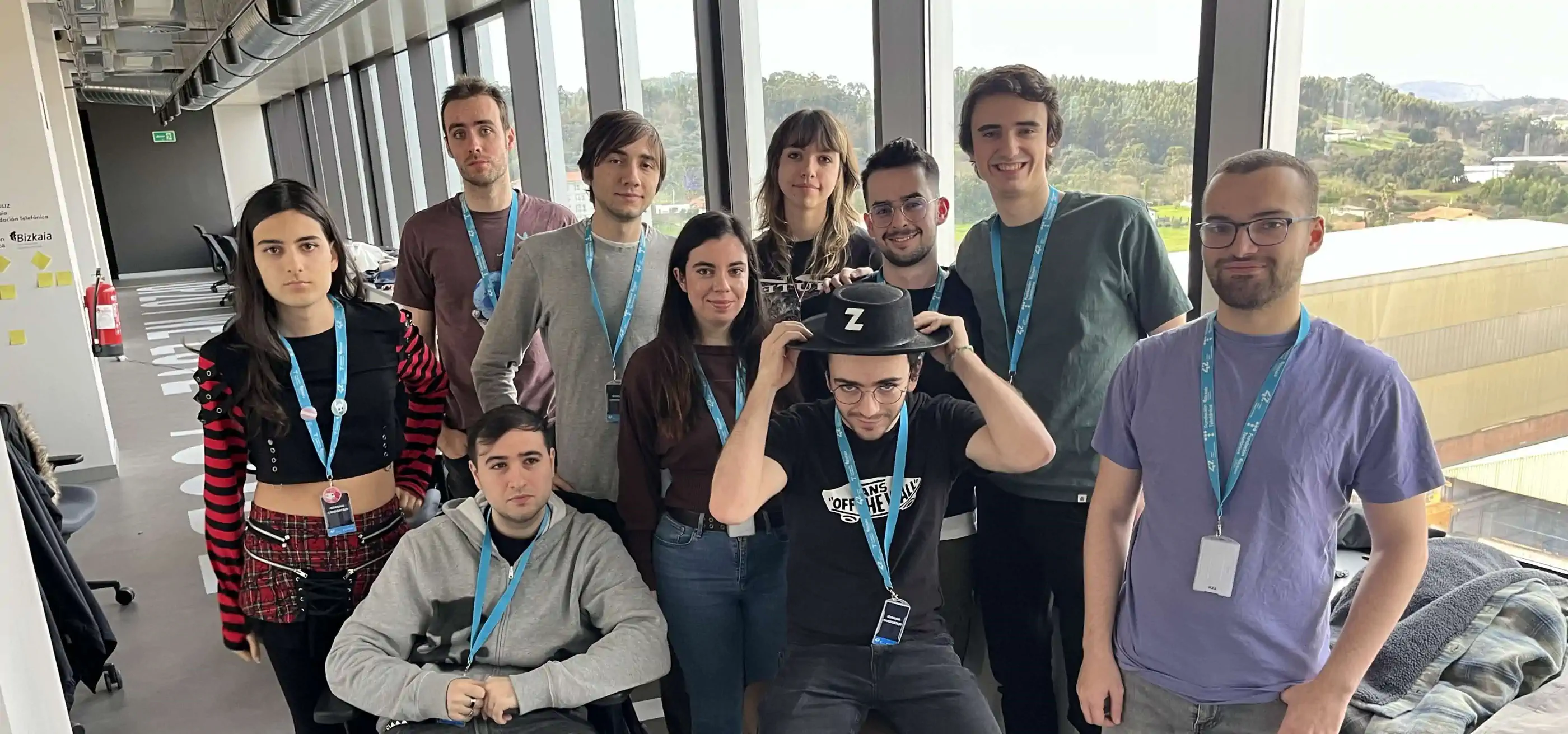
During Global Game Jam 2026, a mixed team from the DigiPen Europe-Bilbao community created Mucho Macho, a cross-platform cooperative game developed from concept to playable build in just 48 hours. The project was recognized as one of the three awarded games of the event, reflecting both strong technical choices and collaborative creativity; winning the Best Implementation of the Theme award.
What is the game about?
It’s your first day as a bounty hunter. A new wrestler is rising in popularity, and your mission is to find the pieces of their mask and take them down before your cover is blown. This is an asymmetric two-player co-op guessing game:
- PC player: Searches the ring for mask pieces and sends them to the mobile player. Uses the description to identify the correct masked target.
- Mobile player: Receives and assembles the mask pieces, then describes the completed mask so the PC player can find the right person.
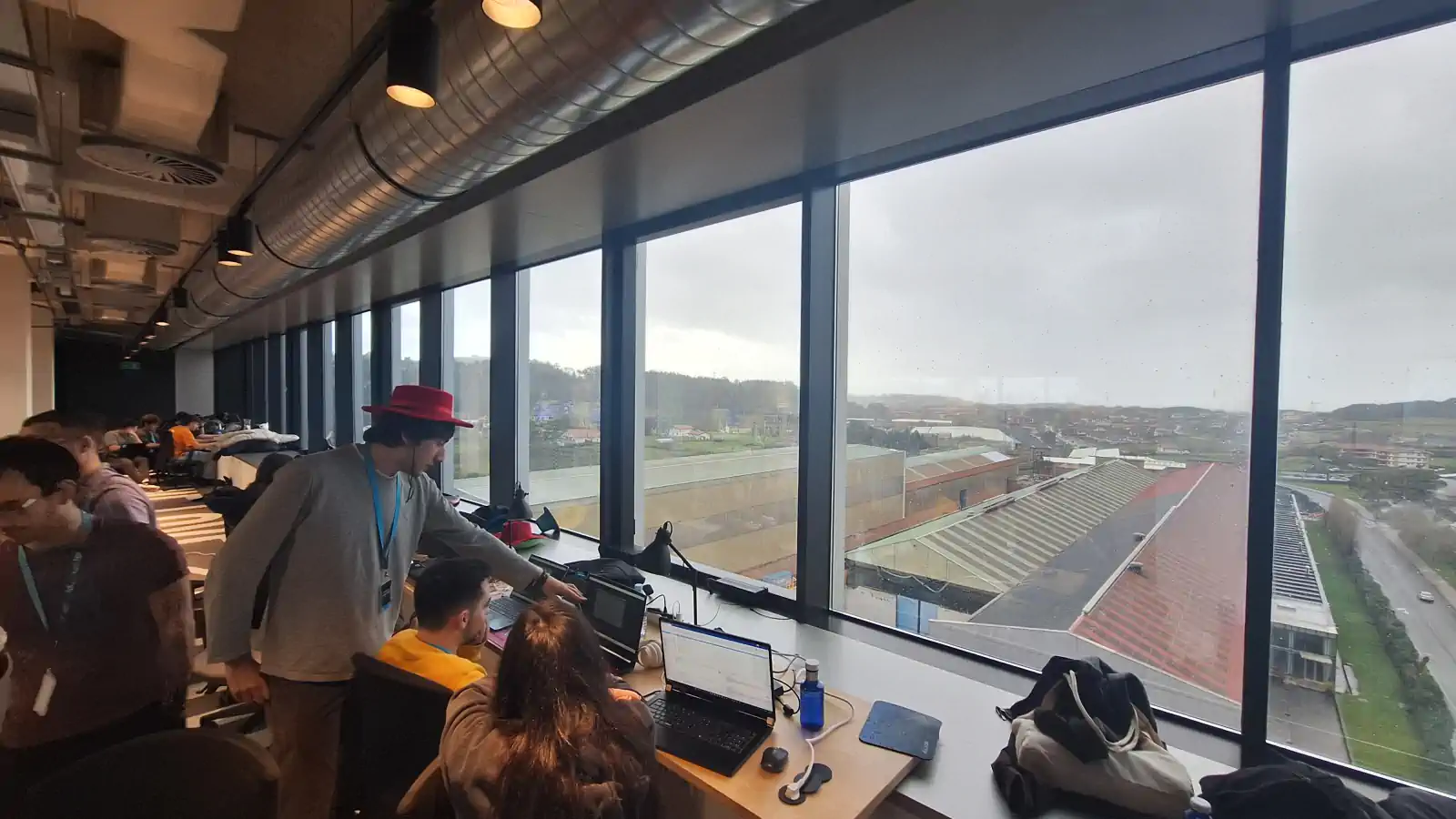
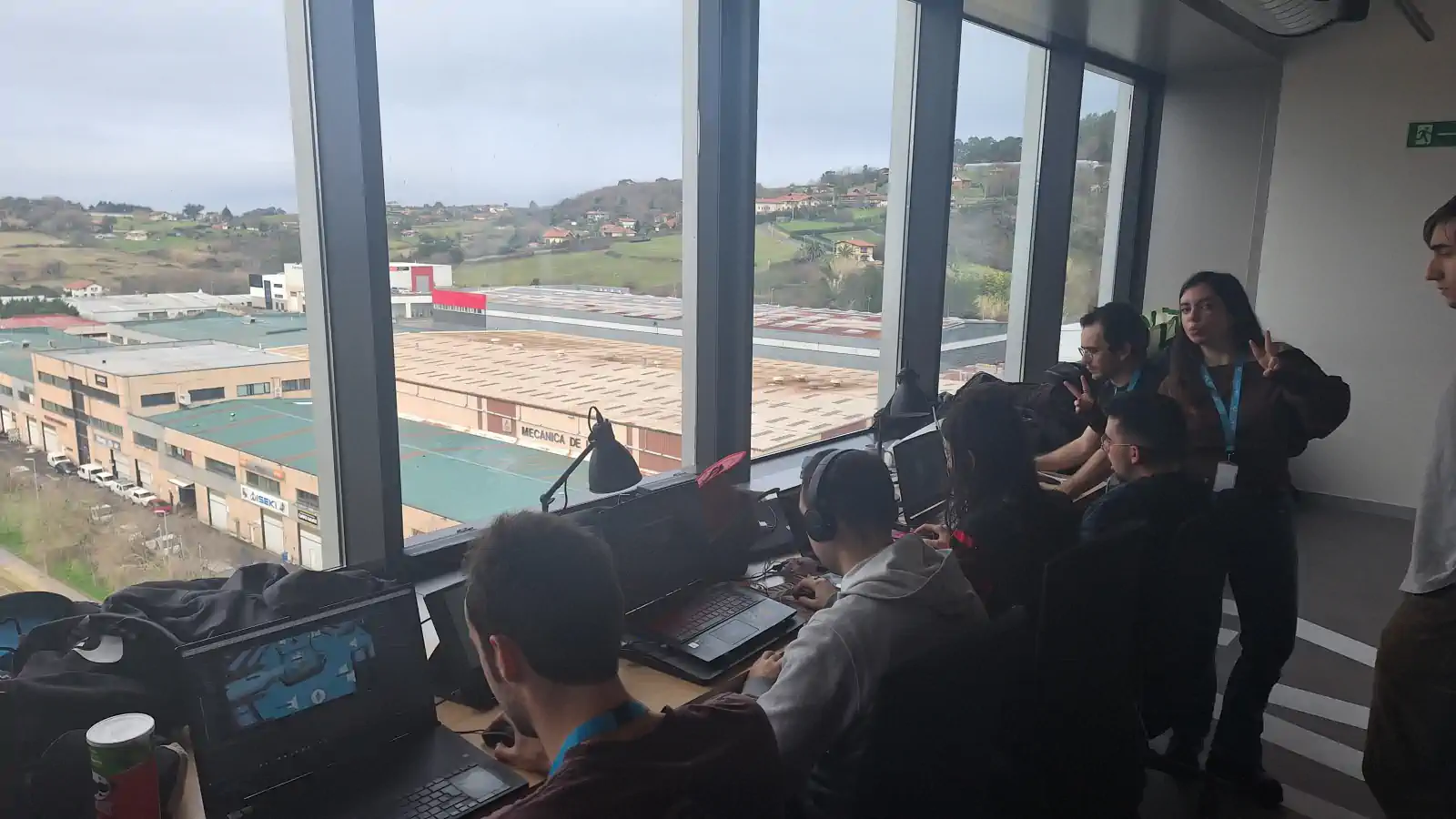
Global Game Jam 2026 took place at the 42 Urduliz Bizkaia campus, a creative hub that hosted the local jam in collaboration with DigiPen Europe-Bilbao and other institutions. The venue brought together enthusiasts, students, professionals, and hobbyists from different backgrounds to explore new ideas and build playable games during an intensive 48-hour development sprint, supported by talks, mentorship, and community-driven collaboration.
I had a lot of fun during this project. I really enjoy seeing what we can manage to do in such a short time, especially when I get to work with people I know I will have fun with, but also get to organize ourselves properly and trust that each will be making a good effort and contributing to creating something as fun and interesting as this was.” – Ignacio Berciano
One Team, Multiple Backgrounds
- Ignacio Berciano & Eneko Tejera - Unity Networking(RTIS Alumni)
- Iñaki Soler - Pathfinding and IA (RTIS Alumni)
- Suyay Charles, Marta Pecharroman, & Ander Fernandez - Gameplay (RTIS Alumni)
- Alex Ceberio - Menu systems and QOL (RTIS Alumni)
- Vanessa Jimenez – 2D Art (BFA Student)
- Iker Quintana – Producer & helping artist (RTIS Student)
- Egoitz García - 3D Art (External Artist)
The “Bolas Fuera” team brought together DigiPen alumni and currently enrolled students working side by side. All alumni involved in the project came from the BS in Computer Science in Real-Time Interactive Simulation, which naturally shaped the direction of the game and encouraged a technology-driven approach to development.
With no dedicated alumni artists on the team, roles adapted organically. Iker and Vanessa, both currently enrolled DigiPen students, in BFA and RTIS respectively, took on visual and artistic tasks while continuing to contribute across disciplines.
Vanessa worked closely with Egoitz, a 3D Artist, to establish a cohesive visual direction, demonstrating the flexibility and problem-solving mindset required in a fast-paced development environment.
At first, the programmer-to-artist ratio felt a little daunting, with only three artists on the team. When they pitched the idea, I remember thinking, “How in the world are we going to make all that art in just 48 hours?” But in the end, with a lot of caffeine and dedication, we pulled it off. It was a wonderful experience, and I can’t wait to work with everyone again next year!” - Vanessa Jimenez
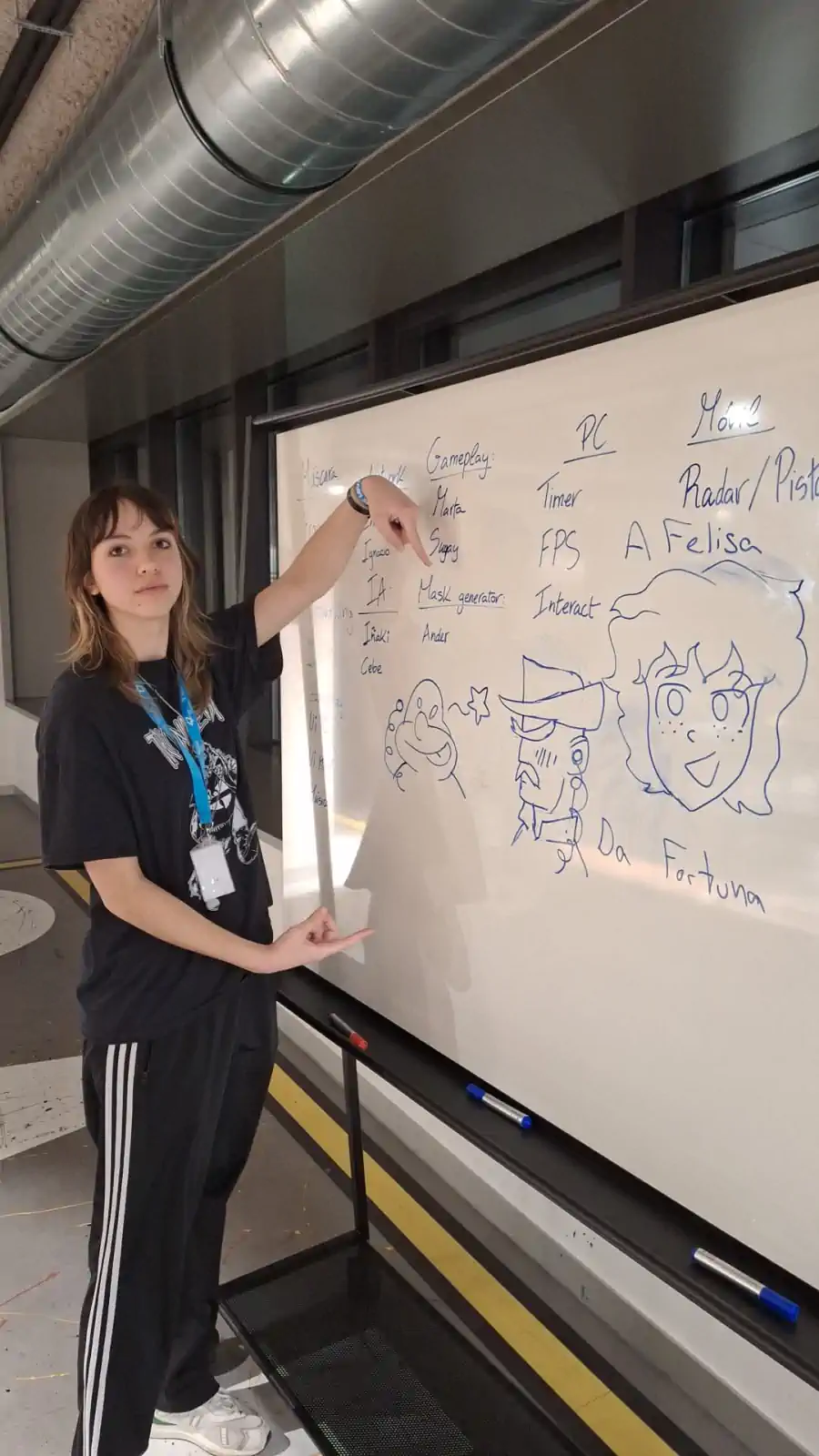
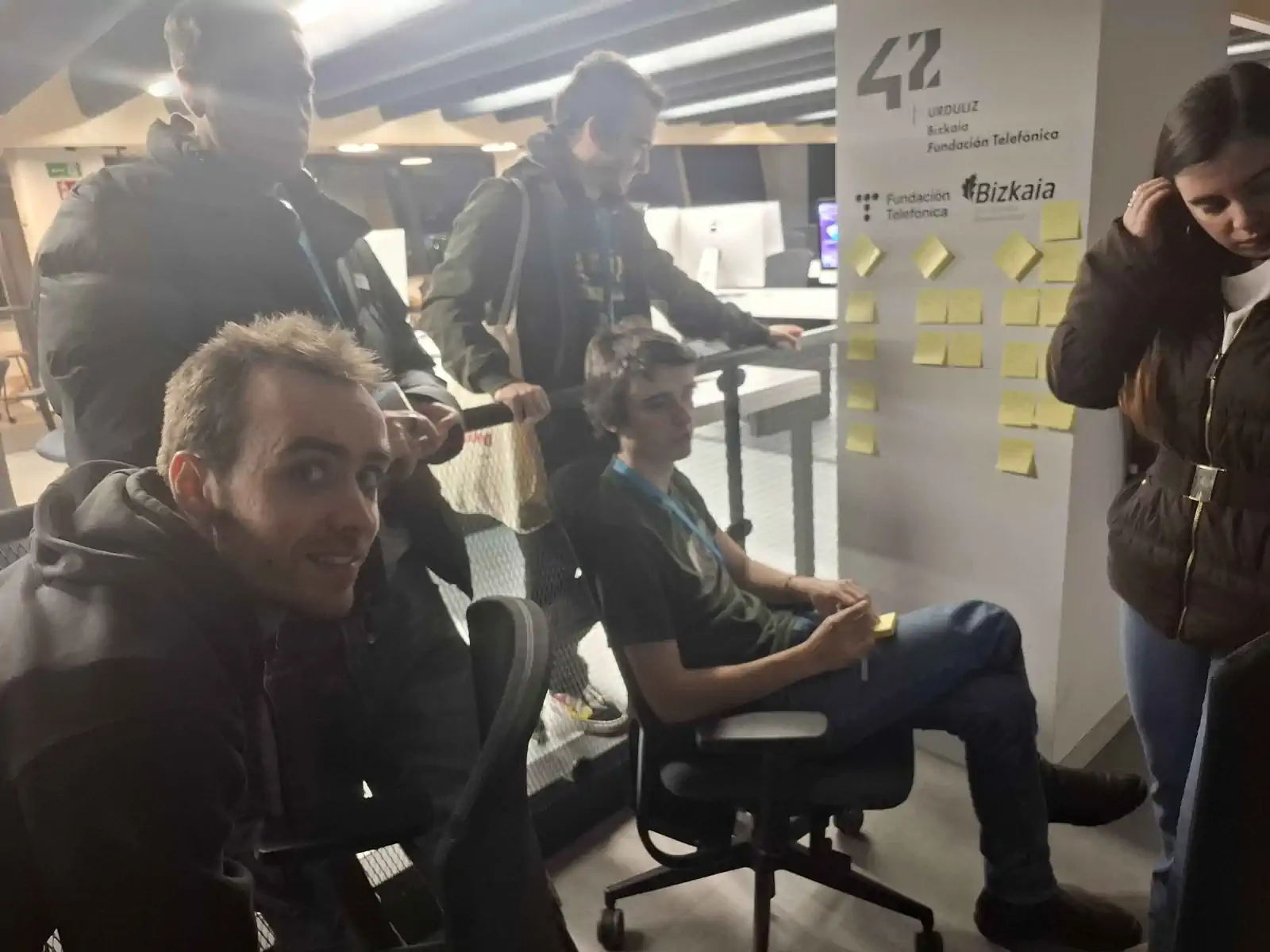
Despite being only a 48-hour game jam, the correct management of tasks and the scope of the game greatly affects the state of the final product. For smaller projects, it’s better to have all the tasks clearly visible to everyone, that’s exactly why we used post-its to handle the work and keep track of the rhythm of the project throughout the entire process. Experiences like this are great for getting to know yourself better and experimenting to handle bigger projects. – Iker Quintana
How to build a Cross-Platform Co-Op in 48 Hours
One of the central challenges of Mucho Macho was delivering a cooperative experience that worked across mobile and desktop platforms within a highly constrained timeframe. This ambition aligned well with the team’s strong technical foundation.
Developed in Unity 6000.0.58f2, the project relied heavily on adapting and tweaking existing engine components to support cross-platform input and cooperative interaction. By working intelligently with Unity’s systems rather than building everything from scratch, the team was able to focus on gameplay clarity, communication between devices, and overall stability. We chatted with Ignacio and Iñaki on the technical challenges they faced:
As part of the technical development, Ignacio focused on making the project’s cross-platform multiplayer functionality possible. What initially seemed like an outlandish idea, creating a phone-to-PC asymmetric multiplayer experience within a 48-hour game jam, became a manageable goal thanks to Unity’s networking framework. By combining the Mirror package with the Unity Transport Package, the team managed to connect two devices before Saturday morning, allowing their Gameplay partners to properly test and iterate on the experience.
The main obstacle came from the fact that Mirror is a legacy networking package. While it works more smoothly with older Unity versions, running it on the latest Unity 6000 builds required significant research and a deep dive into its C# source files. This meant updating dependencies and replacing deprecated code to ensure compatibility with current Unity standards, adding an extra layer of technical complexity to an already demanding production schedule.
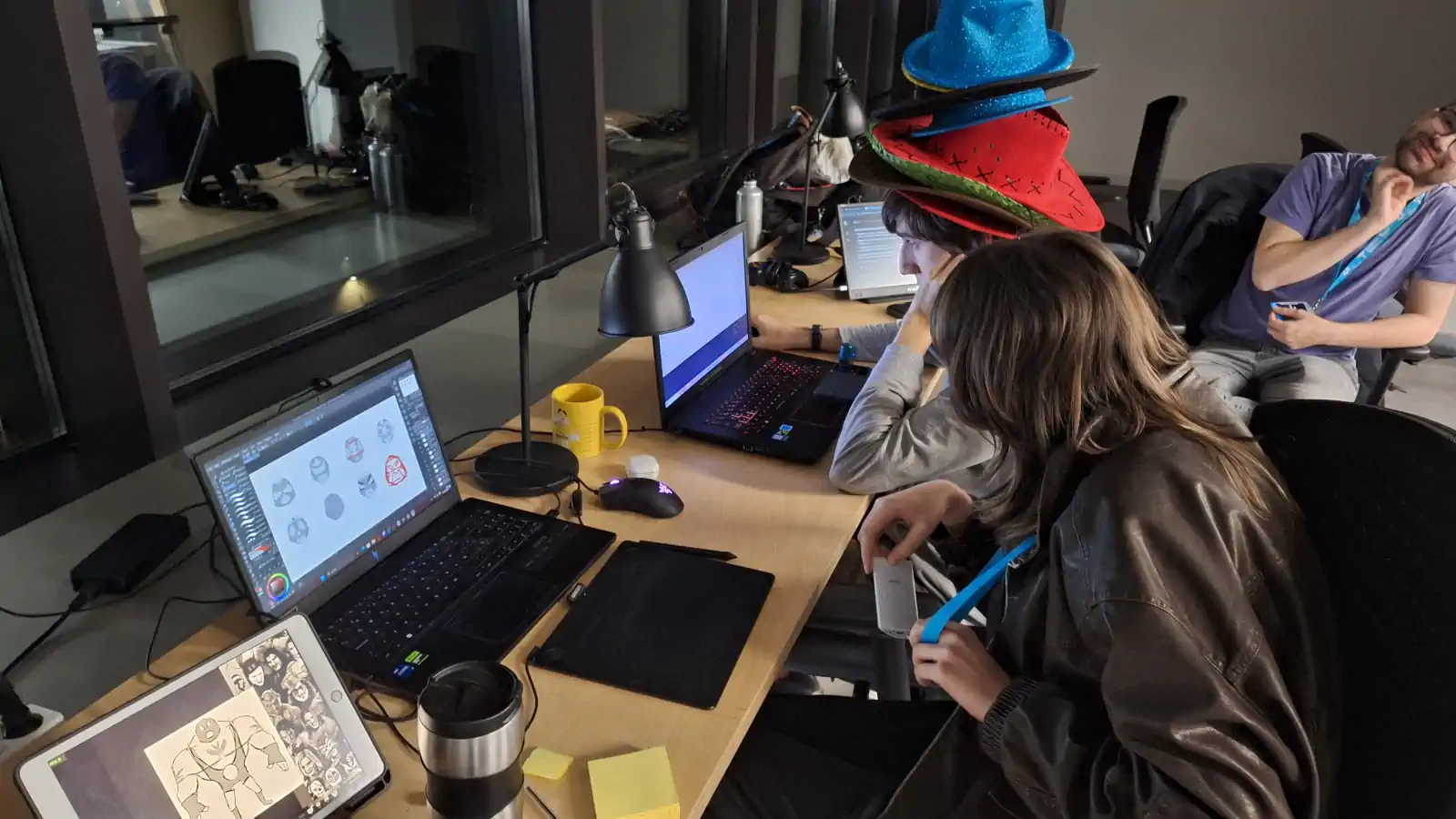
Continuing with the technical development, Iñaki focused on implementing the NPC systems and character animation. What initially seemed like a complex task, managing the pathfinding and movement of NPCs across the scenario, turned out to be surprisingly straightforward thanks to Unity’s Navigation Mesh and Agent components. However, collision avoidance between NPCs required a more nuanced solution. Since Navigation Agents do not rely on the regular collider and physics system but instead use their own internal system, adjustments had to be made to ensure smooth movement. The solution was simple but effective: reducing the size of the Navigation Colliders so NPCs could reach their destinations without blocking one another.
A significant portion of Iñaki’s time was dedicated to refining the body and mask 2D animations, particularly addressing occasional rendering order issues. These technical adjustments, combined with the team’s strong organization and focused mindset despite the intensity of the schedule, were key to keeping the project on track throughout the 48-hour jam and ultimately allowed them to deliver a cohesive experience, even with the added complexity of cross-platform support.
Smart Technical Choices Under Pressure
With a team largely composed of programmers, Mucho Macho leaned into systems-driven design and careful technical decision-making. Clear scoping, constant iteration, and open communication allowed the team to adapt quickly as challenges arose.
The flexibility to shift roles, particularly in art and visual tasks, proved essential, ensuring that the project maintained momentum without sacrificing cohesion. This adaptability, combined with experience and collaboration, ultimately contributed to Mucho Macho being selected as one of the three winning projects of Global Game Jam 2026. Hey, it looks great!
A Shared Jam Experience
Mucho Macho stands as a strong example of what can be achieved when developers with different levels of experience collaborate under shared constraints. Created in just 48 hours, the project showcases how technical skill, creative flexibility, and teamwork can come together to deliver an ambitious cross-platform game within the unique framework of a game jam.
Egoitz took on the responsibility of being the only 3D artist on the team, which initially felt like a challenge. However, collaboration with Vanessa and Iker, who were leading the 2D art, quickly became fluid and productive. The three of them constantly exchanged feedback to ensure the overall aesthetic remained cohesive across both 2D and 3D elements. They explored multiple color palette options before settling on one that worked consistently across disciplines and was also colorblind-friendly.
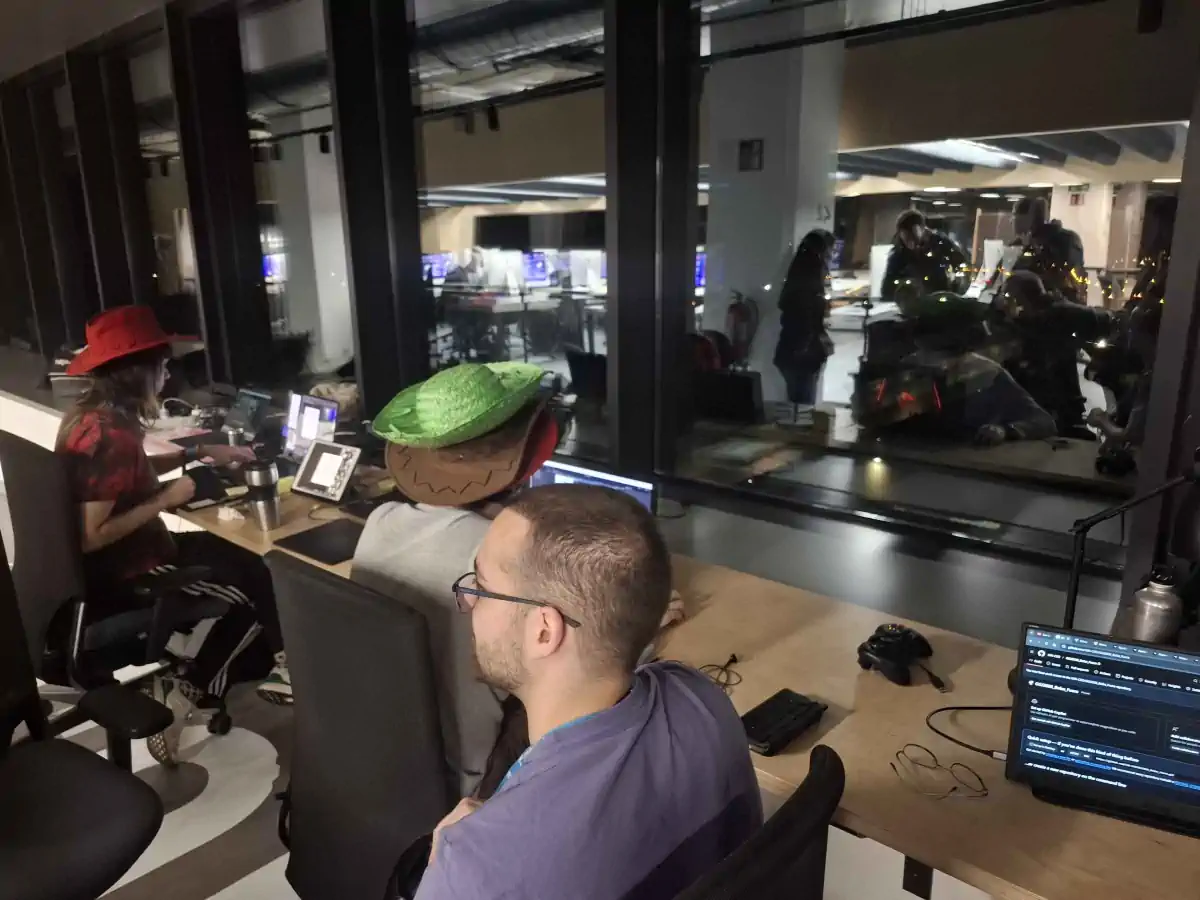
To streamline the 3D shading workflow, Egoitz implemented a technique known as Gradient Shading. This approach relies on a very small texture, often only one pixel in height, where each pixel represents a different color. When applied to a model, Blender and Unity interpolate between those colors to generate smooth gradients. By projecting the model’s UVs without the need for complex seams, he was able to shade multiple objects using a single texture. The result was an efficient workflow that achieved a fast, stylized aesthetic while still allowing room for detailed visual refinement.
In many student projects, coordination can be challenging at first. However, when we fully take ownership of the project, things improve. That’s what happened during the development of Mucho Macho. Led by our producer Iker and his beautiful post-its, we established a clear and structured production plan that we reviewed and updated regularly. Combined with our constant effort and hard work to meet the deadlines, the flow of building this game went great.” – Iñaki Soler
Making a cross-platform co-op game work in just 48 hours is seriously hard, and Mucho Macho is exactly the kind of project that makes us proud of what our community can pull off when the clock is ticking.
Check the game through itch.io!